Sunday, August 24, 2008

Sonny Sharrock - Black Woman (1969)

Photobucket

What more can possibly be said about Sonny Sharrock? It is widely agreed upon that he is the greatest free jazz guitarist, period. He worked within the most important circles of the jazz world from the late ’60s until his death in 1994, playing with Dave Burrell, Norris Jones (a.k.a. Sirone), Milford Graves (all of whom appear on this record), as well as Peter Brötzman, Ronald Shannon Jackson, John Zorn, Miles Davis (he has an uncredited appearance on A Tribute to Jack Johnson), Byard Lancaster, Cecil Taylor, Pharoah Sanders, and Herbie Mann. Since jazz musicians are often judged more by who they played with than what they played, those credentials alone are probably enough to solidify his place in the out-jazz canon.

But who he’s playing with doesn’t even matter; Sharrock’s playing is so unique and powerful that it immediately demands attention. Less about chords and blues licks than bends, swells, swerves, tremolos, slides, and general mind-meltingness, he approaches the guitar as a purely melodic instrument. Even more impressive is his use of effects – there are none. Unlike many of the fusion guitarists of the time who needed their heavy distortion or phasors or wah-wahs or anything else, Sharrock is content to just let his guitar and amp talk.

Black Woman

Wednesday, August 13, 2008

Chrissy Zebby Tembo & Ngozi Family - My Ancestors (1974)

Photobucket

Fuzzed out wah wah psych from Zambian guitarist Chrissy Zebby Tembo. This cat play man. Just listen to the three minute solo on "Oh Ye Ye", a track that was on the Love, Peace & Poetry: African Psychedelic Music comp that came out back in 2004. The guitar work is straight up groovy, man, and fuzzed all the way out. "Trouble Maker" is a dirty little jam with a slight African hint. It's a little more upbeat than most of the stuff I'm diggin' on these days, but it's sunny out and there's a breeze in the air and Chrissy is providing just the right vibrations, you dig.

My Ancestors

Tuesday, August 12, 2008

Get Lifted...Essential Reggae/Dub Recordings

Photobucket

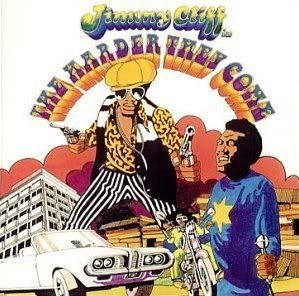
Jimmy Cliff - The Harder They Come (1972)
Photobucket
You won't find a better cross-section of rocksteady, vocal trio, rude boy, and reggae music than on this classic film soundtrack. Bob Marley fans will argue that he is the most influential reggae master of all time. This may very well be true, but this soundtrack is the master of all reggae records. The blending of styles is perfect, the music tight and groovy and the vocals are exquisite. This recording is timeless.
The Harder They Come

The Wailers - Catch A Fire (1973)
Photobucket
The Wailers' (Bob Marley, Peter Tosh & Bunny Wailer) Catch A Fire hit with the force of a revelation when it was released in 1973, and though Chris Blackwell tailored its sound with a rock audience in mind, the album was still unlike anything that had ever come down the pike. Even after everything that followed, and the cult of idolatry that formed around Marley, this remains soulful, message-driven music that goes straight to the blood. Utterly essential.
Catch A Fire

Lee Perry - Kung Fu Meets The Dragon (1975)
Photobucket
Lee "Scratch" Perry (aka Rainford Hugh Perry; aka The Mighty Upsetter; aka Pipecock Jackson; aka Super Ape) is the father of reggae's cousin, dub. He took elements and samples of reggae and, through a mixing process no one is quite sure of (echo chambers & tons of reverb), turned them into semi-psychedelic instrumentals, complete with tape effects and occasional banter from Perry himself.
Kung Fu Meets The Dragon

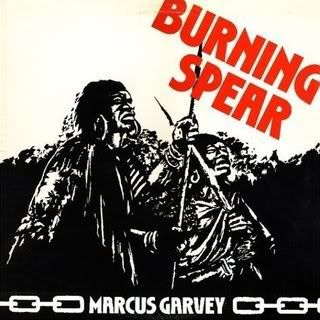
Burning Spear - Marcus Garvey (1975)
Photobucket
Although this is not Winston Rodney aka Burning Spear's first album (he released two albums on the Studio One Label before this) it is the one that busted through the Jamaican market and went international. It's, in my opinion, his best album.
Marcus Garvey (password: villanz)

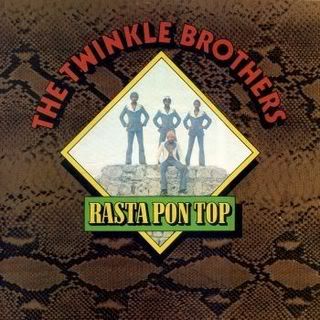
Twinkle Brothers - Rasta Pon Top (1975)
Photobucket
Their best and near widely known record, a rasta-infused, roots-heavy demi-masterpiece that included soul and church doctrine vocal stylings inside the deep grooves.
Rasta Pon Top

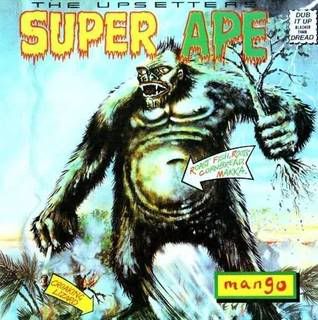
The Upsetters - Super Ape (1976)
Photobucket
This is classic dub driven by one of the original masters, Lee "Scratch" Perry, whose mad genius molded the collective entity known as the Upsetters (his studio and/or backing band). It's often hard to tell whether a given album is an Upsetters album or a Perry album, but Perry's fingerprints are all over this one, from the zany cover to the slow, heavy bass and African drums that permeate it.
Super Ape

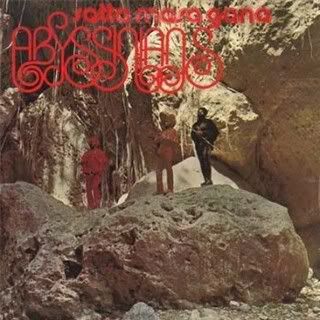
The Abyssinians - Satta Massagana (1976)
Photobucket
There is a heavy spiritual vibe in the vocals of the Abyssinians. The trio were blessed with some of the most gorgeous three-part harmonies in all of reggae. The music is heavy 1970's Roots Reggae, played by Reggae's top musicians. Lot of easy skanking one drops, horn themes on this one.
Satta Massagana

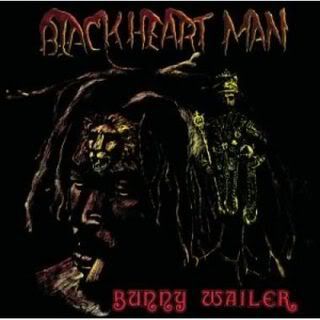
Bunny Wailer - Blackheart Man(1976)
Photobucket
Following Bunny Wailer's 1973 departure from The Wailers, he spent three years retired in the Jamaican countryside before returning to the recording studio. The result was the triumphant Blackheart Man, featuring a number of legendary Jamaican musicians including the Barrett Brothers (Carlton and Aston), Robbie Shakespeare, Skatalite Tommy McCook and former bandmates Marley and Tosh.
Blackheart Man

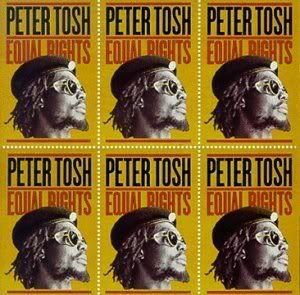
Peter Tosh - Equal Rights (1977)
Photobucket
Even though Captured Live might be Tosh's greatest recorded gift, this 1977 studio album was his best, by far, away from the stage. Equal Rights opens with two great salvos, "Get Up, Stand Up" and "Downpressor Man," both of them politically unequivocal in their support, aptly, of human rights and political equality. In his post-Wailers days, Tosh seemed ever in dialogue with his conscience and his obsession with Bob Marley's fame.
Equal Rights

The Congos - Heart of the Congos (1977)
Photobucket
No reggae album more obscure than the Congos' (airborne falsetto Cedric Myton and tenor Roydel Johnson) Heart of the Congos is as rich, and no richer album is as obscure. Yet another child spawn from "Scratch" Perry's Black Art Studio and easily one of his best.
Heart of the Congos

Augustus Pablo - King Tubbys Meets Rockers Uptown (1977)
Photobucket
Deep deep bass, tight springy drums, sharp guitars, and the evocative melodica of Pablo drifting in and out on waves of delay, mysterious ambience, cross-talk, reverb, and the tightest playing - all dubbed within an inch of its life by King Tubby. One of the best dub records of all time.
King Tubbys Meets Rockers Uptown

Culture - Two Sevens Clash (1978)
Photobucket
Culture's most influential record was based on a prediction by Marcus Garvey, who said there would be chaos on July 7, 1977, when the "sevens" met. With its apocalyptic message, the song created a stir in his Caribbean homeland and many Jamaican businesses and schools closed their doors for the day. Prophecy aside, this is a roots reggae classic.
Two Sevens Clash

Saturday, August 9, 2008

Various Artists - Nigeria 70: Lagos Jump

Photobucket

When it comes to my knowledge of Nigerian music, it can be summed up in three words: Fela Kuti’s Afrobeat. I’ll surmise that the same can be said of most Western listeners. With that, listening to Nigeria 70: Lagos Jump was a refreshing dose of new music for me. It’s the newest title from Strut Records.

Like I said above, I know next to nothing about the development of music in Nigeria in the last 50 years, and won’t pretend otherwise here. I did however learn quite a bit from reading the extensive and informative (as typical for Strut’s releases) liner notes that accompanied this compilation. Not surprisingly, the only musician’s name I recognized in the track list or in the notes was Fela Kuti, but his is a name, and contribution, that only builds on preceding artists.

Without getting into the history and development of the music too much, I’ll say that the tracks here represent many musical movements that took place within Nigeria. The basis for much of the music on the album comes from two contrasting musical styles: Highlife dance band music which revolved around big bands that initially mimicked and then built off of American Swing music, and Juju music which was more of an organic traditional music.

The popularity and prominence of these two very unlike styles waxed and waned as the country went through political strife, but with the infusion of western pop music in the 60’s, things would change - permanently. Rock and Roll, Soul, and Funk made inroads with young musicians who started incorporating these western styles into their own music, beginning the development of Afro-pop, then Afro-jazz, and of course Afrobeat (which Fela Kuti is celebrated for pioneering and why his name is indelibly branded in musical history). The sixteen tracks on this disc are an audible expression of how African musicians took in outside music, played with it, adopted parts of it, and created a fusion of styles of their own.

This disc is in some ways a follow-up to another release that Strut put out in 2001 their first time around titled simply Nigeria 70 (a 3 CD set that goes for insane prices now - if you can find it that is). Whereas the previous release included many established names such as Kuti and others, Lagos Jump focuses on other relatively unknown artists.

Photobucket

Lago Jump

Mulatu Astatke - Ethiopiques Vol. 4: Ethio Jazz & Musique Instrumentale, 1969-1974

Photobucket

In the Ethiopian musical world Mulatu Astatke is atypical, totally unique, a legend unto himself. He was the first Ethiopian musician educated abroad, object of tribute and admiration. Mulatu is the the inventor and maybe the only musician of Ethio-Jazz (Jazz instrumentals with strong brass rythms and traditionnal elements of Ethiopian music).

To some, the term "Ethio-Jazz" might seem impossible; after all, it's a very American form. But what's truly surprising isn't the fact that these musicians play jazz so well, but the range of jazz they manage, from the George Benson-ish guitar workout of "Munaye" to the twisting sax of "Tezeta." Really, though, it's more Jimmy Smith than Duke Ellington in its aim (although Ellington is on the cover, on stage with Astatke, the bandleader behind all these selections). The grooves often smoke rather than swing, with some fiery drumming, most notably on "Yekermo Sew,"(featured on Jim Jarmusch's Broken Flowers) and throughout the guitar is very much to the fore as a rhythm instrument. Perhaps the most interesting cut, however, is "Yekatit," from 1974, which is Astatke's tribute to the burgeoning revolution which would oust Emperor Haile Sellassie. Some of these pieces, certainly "Dewel," has seen U.S. release before; the track appeared in 1972 on Mulatu of Ethiopia, which was Astatke's third American LP, showing that jazz aficionados, at least, had an appreciation for what he was achieving in the horn of Africa. Given that many of his musicians had graduated from police and military bands, they knew their instruments well, and had plenty of practice time, which shows in the often inventive solos that dot the tracks. Varied, occasionally lyrical, but interesting throughout, this shines a fabulous spotlight on a hidden corner of jazz.

Photobucket

Vol. 4

Friday, August 8, 2008

Magic Carpet - Magic Carpet (1972)

Photobucket

In the 1960s and 70s, both in the UK and in America, there was a burgeoning interest in Indian culture and music, most famously spear-headed by virtuoso sitar player Ravi Shankar and sarod player Ali Akbar Khan, amongst others. Numerous UK bands of the era began to use sitar and Indian musical sounds generally to add a flavor of the east to their recordings. By contrast, Magic Carpet was a more cohesive Anglo-Indian fusion, the Indian instrumentation generating and being integral to the music, not simply an addition. Based around the classically trained sitar virtuoso, Clem Alford, and the ethereal voice of Alisha Sufit, Magic Carpet created a distinctive sound described (perhaps misleadingly) as "psychedelic progressive folk" music.

The Magic Carpet album has been described as "a psych folk gem - a unique and extraordinary fusion of east and west, Magic Carpet being one of the very first bands to truly combine Indian and western instrumentation". After a launch at the 100 Club, London, UK, the Magic Carpet band performed at Cleo Laine and Johnny Dankworth's Wavendon, enjoyed airplay on Pete Drummond's Sounds of the Seventies on BBC Radio, plus made several club and festival appearances. However, this novel collective split up shortly after the first album was released. It was only after a lapse of some fifteen years that recognition followed. Widely and more positively reviewed, the original Magic Carpet album has now been reissued on CD and vinyl by the UK Magic Carpet Records label.

Seven of the vocal tracks written by Sufit employ modal tunings in the guitar accompaniment. These 'open' guitar tunings, first introduced and popularized by musicians such as Davey Graham and Joni Mitchell, are supremely compatible with the modal tuning of the sitar, allowing a true integration of sounds. Sufit's vocals feature on nine of the twelve tracks, the remaining three being purely instrumental.

Magic Carpet

Monday, August 4, 2008

Far East Family Band

Photobucket

While Germany is most known for being at the forefront of electronic psychedelic music, Japan certainly had its share of cosmic travelers. Love Live Life + 1, Hiro Yanagida, Food Brain, Kimio Mizutani, Flied Egg and Far Out were but a few examples of music acts at the edge of rock, jazz and the experimental. One of the more mythical of these groups was Far East Family Band, a group who would gain some stature throughout the world during the latter part of the 1970s.

Klaus Schulze was one such luminary to be attracted by this large Japanese ensemble. Helping produce their early albums, Schulze saw a chance to promote cosmic rock all over the globe. However, I always felt their first two albums were trying too hard to be the next Dark Side of the Moon. The instrumental bits are great only to be ruined by sensitive pop ballads - not FEFB's strong suit I'm afraid.

But it all came together on Parallel World. Focusing on their instrumental cosmic sound and pretty much foregoing the pop commercial-oriented songs, the six-piece FEFB unleashed a gem that easily could've found itself on the Kosmische Kouriers label. In fact, the recording comes closest to sounding like the first Cosmic Jokers album with more focus given to the whooshing synthesizers than the guitars (Schulze's influence?). As one can guess, the two keyboard players are featured most prominently, and it's hard to imagine that FEFB actually had two guitarists as well!

The album opens with "Metempsychosis" (Arzachel anyone?) which is a tribal drum and synthesizer atmospheric backdrop piece that sets the stage for "Entering" which contains some intense fuzz bass and a ripping guitar sequence amongst the 12 minutes of keyboard ecstasy. Brilliant, and this is the finest track FEFB has ever recorded! "Kokoro," thankfully, is a short psych ballad. This is the sort of piece their first albums featured, so one can get a brief whiff of this style. The side long closer "Parallel World" sounds like a long-lost Galactic Supermarket recording and aptly finishes a masterwork of cosmic progressive space rock.

The Cave Down From Earth (1974)
Photobucket
The Cave

Nipponjin (1975)
Photobucket
Nipponjin

Parallel World (1976)
Photobucket
Parallel World

password - contramao